
- Commercial Greenhouse
- Film Greenhouse
- PC Greenhouse
- Glass Greenhouse
- Tunnel Greenhouse
- Scientific Research Greenhouse
- Vegetable Greenhouse
- Flower Greenhouse
- Multi-span Greenhouse
- Sawtooth Greenhouse
- Greenhouse Equipments
- Greenhouse Accessories
- Hot Dip Galvanized Pipe
- Irrigation System
- Hydroponics System
- Planting Tools
- Planting technology
Tel: +86 191 5068 3942
Fax:
Mobile: +86 191 5068 3942
Contact: Alina
E-mail: sales@cngreenhouses.com
SKYPE:


UV-Stabilized Greenhouse Film - Fading & Cracking Causes
UV-stabilized greenhouse film at 6 mil: tracing fading and cracking back to the film, the tension, a chemical or the weather, and what a claim needs.
.
TEL:+86 191 5068 3942
- Features


A cover that fades or cracks raises an immediate question, and it is usually the wrong one. The first question is not which film to buy next but what actually failed, because a yellowed sheet, a split at the clip line and crazing over the crown are three different problems with three different owners. This page is about sorting them before anything is ordered or claimed.
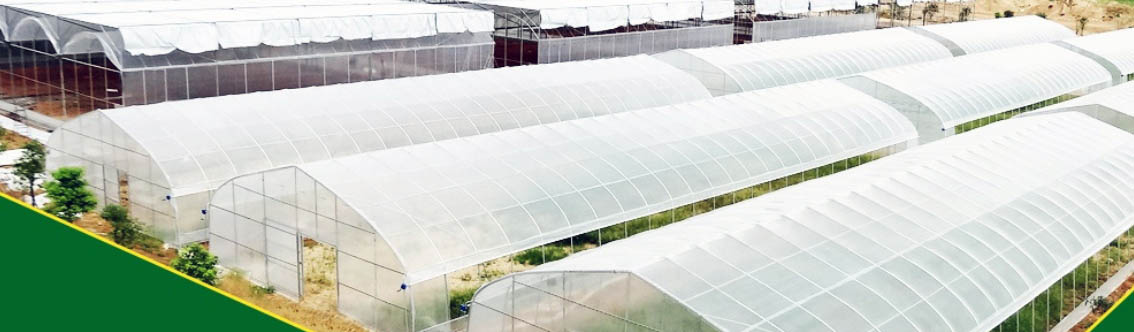
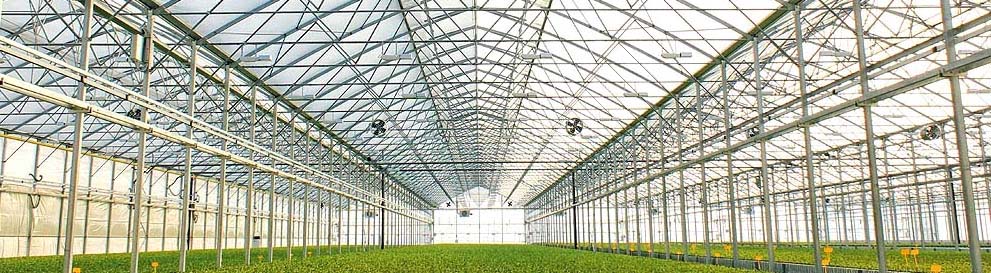
The covering concerned is standard clear greenhouse film at 6 mil, at a covering material thickness of 0.15 mm or 0.12 mm, run as a single layer or as two and held with aluminum clips. It is listed on this model against a frame of hot dip galvanized steel pipe under an arch roof, with spans of 6.4, 8, 9.6 or 10 metres, a total structure height of 4.3 to 6.5 metres and a design wind load of 0.35 kN/m2, and the covering is intended to prevent heat loss and cold air intrusion.
Two neighbouring subjects are left off this page on purpose: why ultraviolet light ages a film, and the storage and replacement cycle of rolls, each have their own page. What follows is the practical side: how to read a failure, how to tell a film cause from a fitting cause, and what a claim needs.


Start With the Fault, Not With the Film
Fading and cracking are two symptoms, not one. Fading, in the sense a grower means it, is a loss of clarity: the sheet goes milky or yellow and the house looks duller from the inside. Cracking is mechanical: a sheet that has lost its give splits, or crazes into fine surface lines that widen into tears.
Where the fault appears matters as much as its type. A cover gone uniformly dull from end to end tells a different story from one intact except for splits along a single clip row, and a sheet split at the low end wall where meltwater stands tells a third. Sorting on distribution comes before sorting on cause.
Four Questions That Sort Most Failures
Four questions narrow almost every complaint to a group, and they are worth answering in writing before a supplier is contacted.
- Where did it start? Evenly over the whole cover, along one clip row or channel, at the end walls, or over the crown.
- How long was it in service, and did it fail over weeks or in a single event?
- What has been inside the house, and on the film? Fumigants, sulphur programmes, cleaning agents, fuel, solvent, concentrated fertiliser.
- How was it fitted? Single or double layer, how tight, at what clip spacing, and in what weather.
The answers sort the case into the groups that follow. They are also, almost exactly, the information a supplier needs before a claim can be judged, which is why collecting them is not paperwork for its own sake.
When the Sheet Is Responsible
A film cause is suggested by distribution rather than by a single spot. Yellowing that is even across the whole cover, appearing on a house that has not been abused and in the same season on every bay, points to the sheet: the clear film is a protected product, and the protection is a reserve that is consumed in service rather than a coating that can be wiped away. Even surface crazing that develops across the crown and both slopes reads the same way.
Two things are worth checking before the sheet is blamed. The first is what the roll went through before it was fitted, since a film that spent a season in a hot store arrives with part of its working life already spent, as set out in the note on film storage and the replacement cycle. The mechanism behind the fading, and what a stabiliser does while it happens, is explained on the page about how ultraviolet ageing works inside the film.
The second check is whether the failing sheet is the film the house was listed with. This model is listed with standard clear greenhouse film at 6 mil, at 0.15 mm or 0.12 mm, and a builder's or household sheet bought to patch one bay will not age like the cover around it. When a single panel fails years before its neighbours, the question to ask first is what is different about that panel.

Chemical Contact: The Cause Most Often Missed
Chemicals damage where they touch, and the pattern they leave is the opposite of a film cause: local rather than uniform. Sulphur used in some crop programmes, chlorine from cleaning or from a water supply, diesel and solvent spills, wood preservative vapour and concentrated fertiliser splashes all attack polyethylene from the surface. The sheet goes dull, tacky or brittle in patches, often on the lower walls and the end panels, and it fails while the cover above it is still sound.
If a fault follows the line where a spray or fumigant drifts, or appears first where fuel is stored beside the house, the cause is in the house rather than the film; the answer is a chemical compatible with polyethylene and keeping fuel and solvent out of the covered space. Air movement helps as well, because vapour that is not left standing against the sheet does less work, and ventilation here is manual or electric.
Damage From Tension, Clips and the Channel
Tension damage has a signature too. Splits that begin at a clip and travel down the slope, a whitened band along the channel, or tears all starting from the same clip row are the marks of a sheet that was over-tensioned or held too tightly at one line. A cover fitted very tight in cold weather is tighter again in summer, so the load goes into the clip line rather than the film.
A wind event can produce the same result on a sound sheet, and it usually leaves a direction: damage concentrated on the windward face, or at the corners where the cover turns. In both cases the film is the victim rather than the cause, and the remedy belongs to the frame, the tension and the clip spacing rather than to the next roll of film.

Judging a Claim: What Evidence Decides It
A claim is decided on evidence rather than on adjectives, and most of it can be collected in an afternoon. Photograph the fault from two metres and from thirty centimetres, so that both the pattern and the surface are visible. Record the date the cover went on, the date the fault appeared and the thickness the roll was supplied at. Note whether the sheet was run as one layer or two, how it was tensioned and in what weather, and list everything applied inside the house since the cover was fitted.
Two habits separate a case that can be judged from one that cannot. Keep a sample cut from a sound area beside the fault, with the roll identification if the label is readable, because a labelled piece of film answers questions photographs cannot. And keep a dated record of the season, since a fault following a known fumigation, fuel spill or storm is a different case from one with no event behind it. Whether a cover is finished at all is separate from what damaged it, and that is treated in the note on not rushing to replace a cover film.

Cover Data and What Happens Next
The covering on this model is standard clear greenhouse film at 6 mil, at a covering material thickness of 0.15 mm or 0.12 mm, run as a single layer or as a double layer and held by aluminum clips on the frame channel. The frame is hot dip galvanized steel pipe under an arch roof, with spans of 6.4, 8, 9.6 and 10 metres, a total structure height of 4.3 to 6.5 metres and ventilation that is manual or electric, and it is drawn for a design wind load of 0.35 kN/m2. The pipe is specified at 70 to 85 micrometres of zinc under BS EN ISO 1461 and assessed to BS EN ISO 14713-1, so the frame's working life follows the corrosivity class of the site: class C2 (clean), C3 (urban), C4 (industrial) or C5 (coastal). Crops grown under it are vegetables, fruit, flowers and seed nursery stock, and sizes are quoted to the customer's own drawing rather than a fixed footprint.
The company behind the covering is a manufacturer rather than a trading house, and the items it sells are produced in its own works, which allows quality control and competitive pricing on one order. The structure has been manufactured for above 35 years in the company's own frame factory. A house leaves the works in three groups, metal structures, covering system and install accessories, and a replacement cover is ordered as a covering group matched to the frame channel and the clips already in place. Samples of the greenhouse products, including covering film components, are free of charge, with sample freight borne by the customer, and after the order an after sales engineer provides layout drawings and the installation manual and can travel to the customer's country where on site supervision is wanted.
Reporting on how commercial growers handle covering failures is published by Greenhouse Grower, and public guidance on protected cultivation and covering materials includes material from the FAO. The wider range this covering belongs to is shown under our polyethylene film greenhouses.
If you have a cover that has faded or cracked and want it judged rather than guessed at, call us on +86 191 5068 3942 or send an e-mail to sales@cngreenhouses.com. Send the photographs, the dates, the supply thickness and the chemicals used in the house, and the case can be assessed against evidence rather than symptoms.


Frequently Asked Questions
Q: How do I tell whether fading came from the film itself or from the house?
By distribution. Even yellowing across the whole cover and every bay points to the sheet, because the protection in a clear film is a reserve consumed in service and cannot be wiped off. Damage that is local or concentrated on the lower walls and end panels usually points to something in the house, most often chemical contact. A single panel failing long before its neighbours is a third case.
By distribution. Even yellowing across the whole cover and every bay points to the sheet, because the protection in a clear film is a reserve consumed in service and cannot be wiped off. Damage that is local or concentrated on the lower walls and end panels usually points to something in the house, most often chemical contact. A single panel failing long before its neighbours is a third case.
Q: What does a crack that starts at a clip mean?
It usually means the tension put the load into the clip line. Splits that begin at a clip and travel down the slope, a whitened band along the channel, or a set of tears all starting from one clip row are marks of a cover held too tightly at that line. A cover fitted very tight in cold weather is tighter in summer, and a wind event can leave the same pattern, with damage concentrated on the windward face or at the corners where the cover turns.
It usually means the tension put the load into the clip line. Splits that begin at a clip and travel down the slope, a whitened band along the channel, or a set of tears all starting from one clip row are marks of a cover held too tightly at that line. A cover fitted very tight in cold weather is tighter in summer, and a wind event can leave the same pattern, with damage concentrated on the windward face or at the corners where the cover turns.
Q: Which chemicals damage greenhouse film?
Sulphur used in some crop programmes, chlorine from cleaning or from a water supply, diesel and solvent spills, wood preservative vapour and concentrated fertiliser splashes. The damage they leave is local rather than uniform: the sheet goes dull, tacky or brittle in patches, and the fault follows the line where the spray or vapour reached. Ventilation helps because vapour left standing against the sheet does more work than vapour that keeps moving.
Sulphur used in some crop programmes, chlorine from cleaning or from a water supply, diesel and solvent spills, wood preservative vapour and concentrated fertiliser splashes. The damage they leave is local rather than uniform: the sheet goes dull, tacky or brittle in patches, and the fault follows the line where the spray or vapour reached. Ventilation helps because vapour left standing against the sheet does more work than vapour that keeps moving.
Q: What should be collected before a claim is made?
Photographs from two metres and from thirty centimetres, the date the cover was fitted, the date the fault appeared, the supply thickness, whether it was one layer or two, how it was tensioned and in what weather, and a list of everything applied inside the house. Keep a sample cut from a sound area beside the fault with the roll identification, and a dated record of the season.
Photographs from two metres and from thirty centimetres, the date the cover was fitted, the date the fault appeared, the supply thickness, whether it was one layer or two, how it was tensioned and in what weather, and a list of everything applied inside the house. Keep a sample cut from a sound area beside the fault with the roll identification, and a dated record of the season.
Q: What covering and frame figures apply to this house?
Cover: standard clear greenhouse film at 6 mil, at 0.15 mm or 0.12 mm, single layer or double, held with aluminum clips. Frame: hot dip galvanized steel pipe under an arch roof, spans of 6.4, 8, 9.6 or 10 metres, total height 4.3 to 6.5 metres, ventilation manual or electric, design wind load 0.35 kN/m2. Crops are vegetables, fruit, flowers and seed nursery stock, and sizes are quoted to the customer's own drawing.
Cover: standard clear greenhouse film at 6 mil, at 0.15 mm or 0.12 mm, single layer or double, held with aluminum clips. Frame: hot dip galvanized steel pipe under an arch roof, spans of 6.4, 8, 9.6 or 10 metres, total height 4.3 to 6.5 metres, ventilation manual or electric, design wind load 0.35 kN/m2. Crops are vegetables, fruit, flowers and seed nursery stock, and sizes are quoted to the customer's own drawing.
Q: Are samples free, and who pays the freight?
Samples of the greenhouse products, including covering film components, are supplied free of charge, with the freight on a sample delivery borne by the customer. For a covering order, a replacement is quoted as a covering group and matched to the frame channel and the clips already in place.
Samples of the greenhouse products, including covering film components, are supplied free of charge, with the freight on a sample delivery borne by the customer. For a covering order, a replacement is quoted as a covering group and matched to the frame channel and the clips already in place.
Note: If you're interested in the product, please submit your requirements and contacts and then we will contact you in two days. We promise that all your informations won't be leaked to anyone.
 Deutsch
 Español
 Français
 Italiano
 Português
 日本の
 한국어
 العربية
 български
 hrvatski
 česky
 Dansk
 Nederlands
 suomi
 Ελληνικά
 हिन्दी
 norsk
 Polski
 Română
 русский
 Svenska